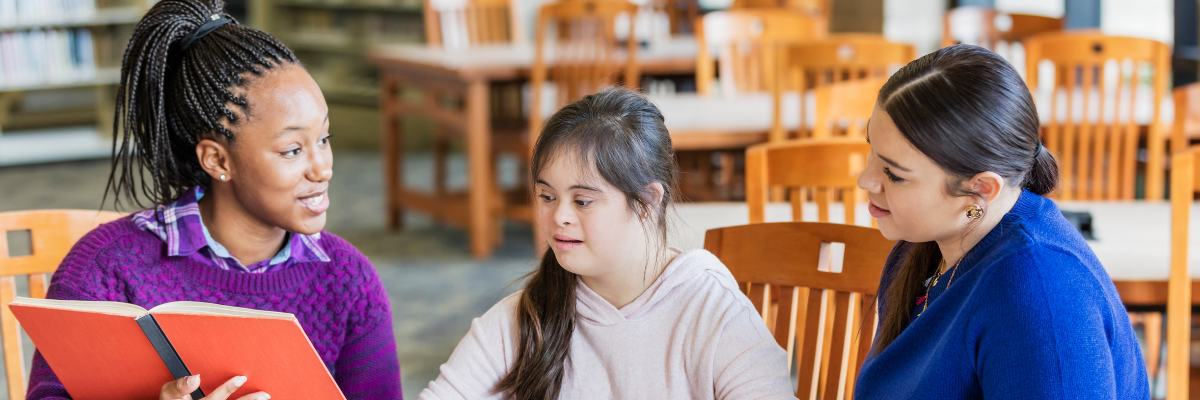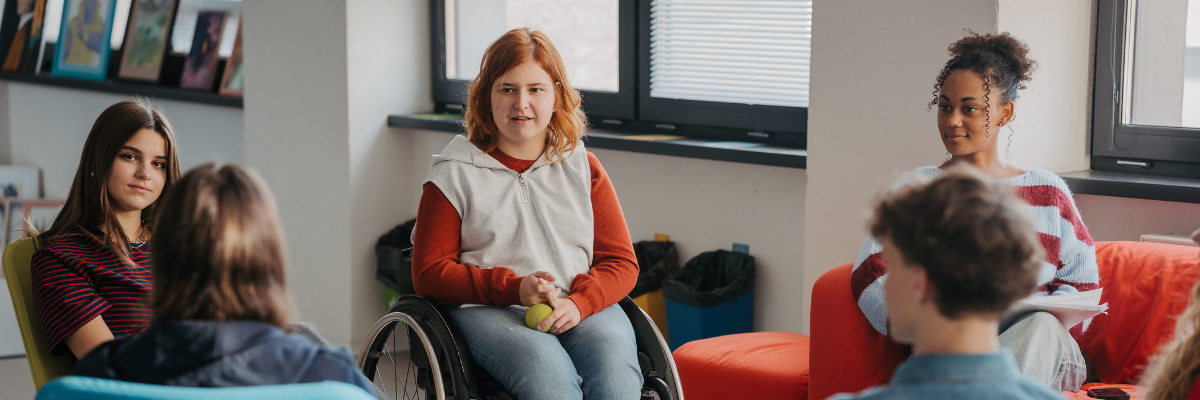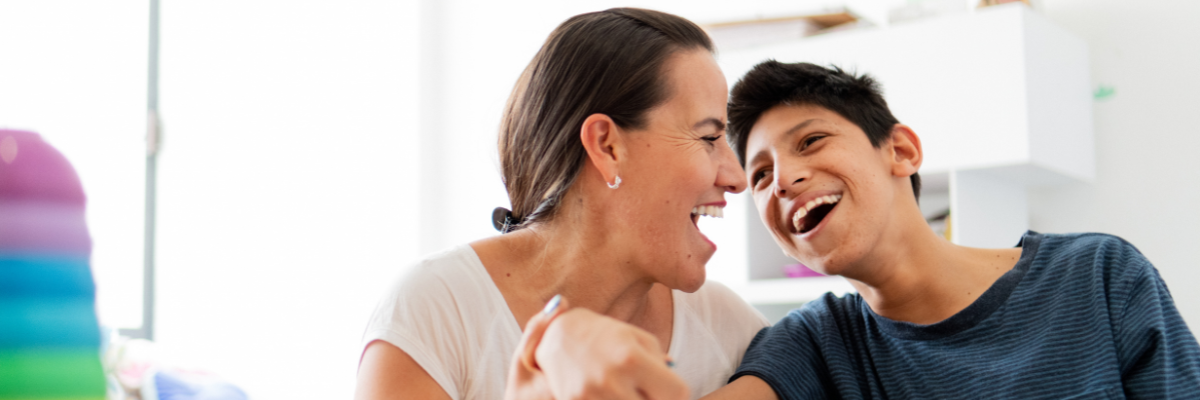
Communication in disability parenting often means learning to understand a child in ways that go far beyond spoken words. Some children do not use speech at all. Others speak with their voices but communicate in ways that are uniquely their own. Many families discover that communication is not a single skill. It is a relationship that grows through patience, observation, and a deep commitment to understanding a child’s inner world.
In an episode if our 2 Moms No Fluff podcast, 1in6 Support Co-Founder, Iris Mehler shared a powerful story about her daughter Keren. Keren is non-verbal, yet she communicates with clarity and intention. She uses her eyes, her expressions, and her presence to share what she feels and what she needs. Iris described a moment when Keren was trying to express something important, and the message did not come through right away. The frustration built until it became overwhelming. When Iris finally understood what Keren had been trying to say, the relief was immediate for both of them. It was a reminder that communication is not defined by speech. It is defined by connection.
Families of children who speak often describe similar experiences. A child may use words, but the meaning behind those words may not follow typical patterns. Some children script from shows or repeat phrases that carry emotional meaning rather than literal meaning. Others speak in short bursts, or with a rhythm that reflects their sensory experience. Some children use a mix of speech, gestures, and behavior to communicate a complete message. These forms of communication are just as rich and expressive as spoken language that follows expected patterns.
Understanding Communication Beyond Words
Parents often become skilled interpreters of their child’s cues. A shift in posture can signal discomfort. A repeated phrase can signal anxiety. A glance can signal excitement or a request for connection. These signals may be subtle, but they carry real meaning. Learning to read them takes time, and it often requires letting go of assumptions about what communication should look like.
Children who speak may still rely on non-verbal cues to express their most important needs. Children who do not speak may still communicate with remarkable clarity. In both cases, communication becomes a shared language that grows through practice and trust.
Helping Others Understand a Child’s Communication Style
Parents often find themselves teaching others how to communicate with their child. This might involve preparing a teacher before the school year begins, guiding a doctor during an appointment, or explaining to relatives how to recognize a child’s cues. These conversations help create environments where children can participate fully and comfortably.
Advocacy becomes part of communication as well. Parents learn to speak up themselves to ensure that their child’s communication style is respected. They remind others that non-verbal does not mean non expressive, and that verbal does not always mean typical. They help shift the focus from what a child cannot do to what they are already doing beautifully.
Communication Within the Family
Communication is just as important within the home. Families learn to check in with one another, share information, and support each other through moments of uncertainty. They also learn to celebrate communication successes. A new gesture, a shared moment of understanding, or a breakthrough in connection can feel like a milestone.
These moments remind families that communication is not only about solving problems. It is also about building relationships. It is about creating a sense of safety and belonging. It is about recognizing the many ways a child expresses themselves and honoring each one.
Growing Together Through Communication
Communication evolves as children grow. Parents grow alongside them. What begins as a challenge can become a source of strength. Iris’s story about Keren is a reminder that every child has a voice, whether that voice is spoken, gestured, or expressed through presence and emotion. When parents listen with patience and openness, they discover how much their children are already telling them.
Communication is not only a skill. It is a relationship. It is a practice of noticing, understanding, and responding with care. It is one of the most powerful ways families build connection and community.
Watch the Full Podcast Episode
This article is based on a 2 Moms No Fluff podcast episode which is part of our ongoing podcast series offering an uncensored, often irreverent look at raising children with disabilities and proudly sponsored by 1in6 Support. You can watch the full conversation on this topic here.